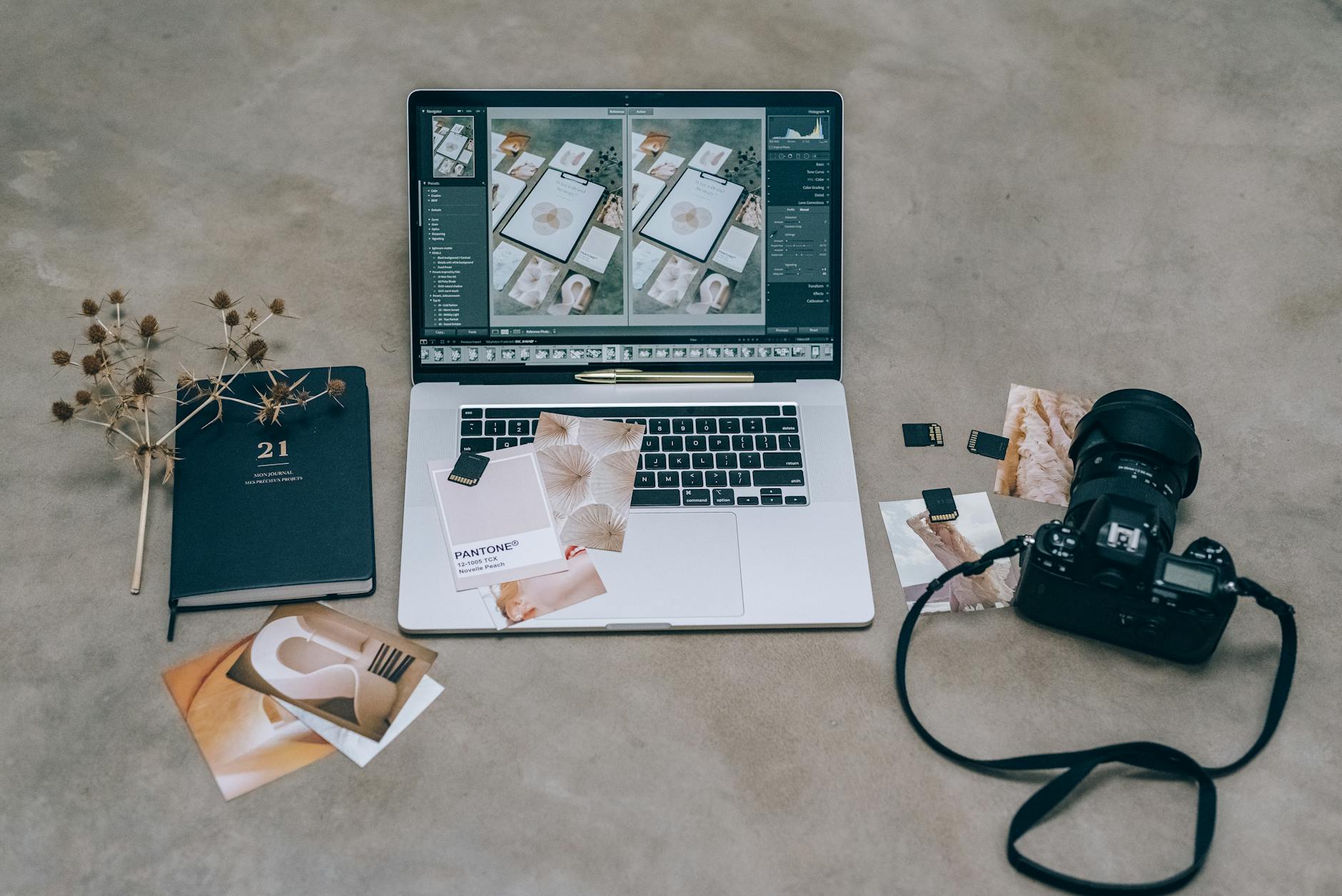
What Are Photoshop Actions and Why Should You Care

What Are Photoshop Actions and Why Should You Care

If you’ve ever applied the same edits to ten photos in a row — same curves adjustment, same sharpening, same resize — you’ve done work a computer should be doing for you. That’s exactly what Photoshop Actions solve. Actions in Plain English A Photoshop Action is a recorded sequence of steps that you can replay with one click. Think of it as a macro. You hit record, perform your edits, hit stop, and Photoshop saves every step.


Building a Skin Smoothing Action That Looks Natural

Building a Skin Smoothing Action That Looks Natural

Most skin smoothing actions produce results that look obviously retouched — waxy, pore-free skin that belongs in a video game, not a photograph. Building a natural-looking skin smoothing action requires understanding what makes skin look like skin, and carefully preserving those qualities while reducing what you don’t want. What Natural Skin Looks Like Real skin has texture at multiple scales. There are large-scale features (bone structure, muscle contour), medium-scale features (pores, fine lines), and small-scale features (micro-texture that gives skin its matte quality).

Restoring Blurry Vintage Photos with Photoshop's Generative Upscale (One-Click Method)

Restoring Blurry Vintage Photos with Photoshop's Generative Upscale (One-Click Method)

I’ve spent the last few years watching AI integration transform Photoshop from a static tool into something genuinely intelligent. And honestly? The new Generative Upscale feature might be one of the most practical implementations I’ve seen yet. In this excellent tutorial, Aaron Nace (PHLEARN) walks through exactly how to take a blurry vintage photo and restore it to crisp, magazine-quality clarity in literally one click. Let me break down what you’re about to learn and why it matters for anyone sitting on a collection of old family photos or soft-focus film scans.

How to Share and Distribute Your Photoshop Actions

How to Share and Distribute Your Photoshop Actions

You’ve built a collection of useful Photoshop actions. Now you want to share them — with your team, your clients, or the world. The process seems simple (export and send), but doing it properly requires attention to compatibility, documentation, and user experience. Exporting Actions Correctly In the Actions panel, select the action set (the folder) you want to export — not an individual action. Go to the Actions panel menu and choose “Save Actions.

Remove Distractions in Photoshop in Minutes: Aaron Nace's Game-Changing Generative Fill Workflow

Remove Distractions in Photoshop in Minutes: Aaron Nace's Game-Changing Generative Fill Workflow

The Game-Changer for Photo Cleanup I’ve spent years testing different Photoshop retouching workflows, and I can tell you without hesitation: the method Aaron Nace demonstrates in this tutorial is genuinely one of the fastest ways to remove distractions from your images. What used to take 15-20 minutes of careful cloning and healing now takes just a couple of clicks. In this excellent tutorial, Aaron Nace (PHLEARN) reveals exactly how to leverage Photoshop’s Generative Fill with the Selection Brush tool to eliminate unwanted elements in seconds.

Photoshop Scripts vs Actions: Which Should You Use

Photoshop Scripts vs Actions: Which Should You Use

Actions and scripts are both automation tools in Photoshop, and they overlap enough in capability to cause confusion. But they serve different purposes, and choosing the right one for a task matters. Actions: Record and Replay Actions record a linear sequence of steps and replay them exactly. You don’t write code — you perform the steps manually while Photoshop records, then it plays them back. Strengths: Zero programming required Easy to create, modify, and share Visual editing in the Actions panel Can include dialog stops for user input Support conditional actions (Insert Conditional from the panel menu) Limitations:

How to Record Complex Multi-Step Actions

How to Record Complex Multi-Step Actions

Recording a simple Photoshop action is straightforward — hit record, do your steps, hit stop. But complex multi-step actions that work reliably across different images require planning and a few techniques most people skip. Plan Before You Record The biggest mistake is hitting the record button and figuring it out as you go. Complex actions need a written plan. Open a text file and list every step in order. Note which steps need user input (like selecting an area) and which should run automatically.

Photoshop Actions: Building a Repeatable Workflow That Actually Saves Time

Photoshop Actions: Building a Repeatable Workflow That Actually Saves Time

I’ll be honest—my first Photoshop action was a disaster. I recorded myself adjusting levels, applying a filter, and resizing an image, thinking I’d save hours. When I played it back on a different photo, it completely mangled the colors and cropped half the subject out of frame. That failure taught me something crucial: Photoshop actions aren’t magic. They’re powerful when you understand what you’re actually recording. Let me share what I’ve learned over years of building workflows that genuinely stick around in my regular rotation.

Photoshop Actions: The Workflow Game-Changer I Wish I'd Discovered Earlier

Photoshop Actions: The Workflow Game-Changer I Wish I'd Discovered Earlier

Photoshop Actions: The Workflow Game-Changer I Wish I’d Discovered Earlier I spent three years doing the same thing every single day: open an image, resize it to 1200x800, add a subtle vignette, boost saturation by 12%, and export as JPEG. Three years of mindless clicking. Then I discovered Photoshop actions, and honestly, I felt a bit foolish for not exploring them sooner. If you’re not using actions yet, you’re leaving serious productivity on the table.

Organizing Your Photoshop Workspace for Speed

Organizing Your Photoshop Workspace for Speed

Fast editing isn’t about working frantically. It’s about eliminating the hundreds of micro-delays that accumulate during a session: hunting for panels, navigating nested menus, reaching for tools that should be one click away. Workspace organization directly translates to editing speed. Here’s a systematic approach to optimizing every aspect of your Photoshop workspace. Panel Layout The default Photoshop workspace displays too many panels, most of which you rarely touch. Start by closing everything.

Photoshop 2026's Game-Changing Adjustment Layers: A Complete Breakdown

Photoshop 2026's Game-Changing Adjustment Layers: A Complete Breakdown

When Photoshop 2026 dropped, I immediately noticed something that made me genuinely excited: three adjustment layers that had been living in Lightroom finally made their way into Photoshop as native adjustment layers. This isn’t just a convenience update—it’s a legitimate workflow game-changer for anyone who edits photos seriously. In this excellent tutorial, Aaron Nace (PHLEARN) breaks down exactly how to use Photoshop’s newest adjustment layers: Color & Vibrance, Clarity & Dehaze, and Grain.

Creating a One-Click Portrait Enhancement Action

Creating a One-Click Portrait Enhancement Action

Portrait retouching typically involves the same core steps: smooth skin, brighten eyes, enhance color, add a subtle vignette. Doing this manually on every portrait takes 10-15 minutes. With a well-built action, it takes under a second — and you can fine-tune each adjustment after the fact. Here’s how to build a portrait enhancement action that’s both powerful and flexible. The Design Philosophy The biggest mistake in action design is baking in fixed values.